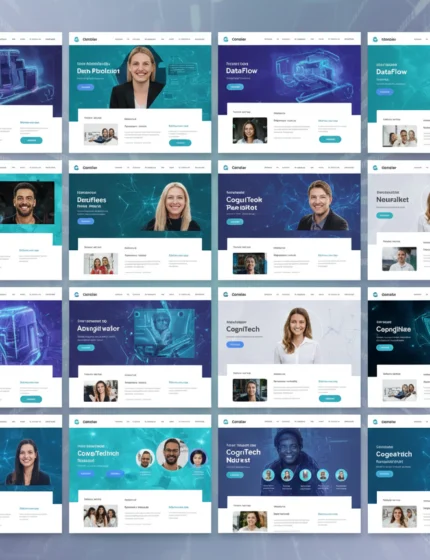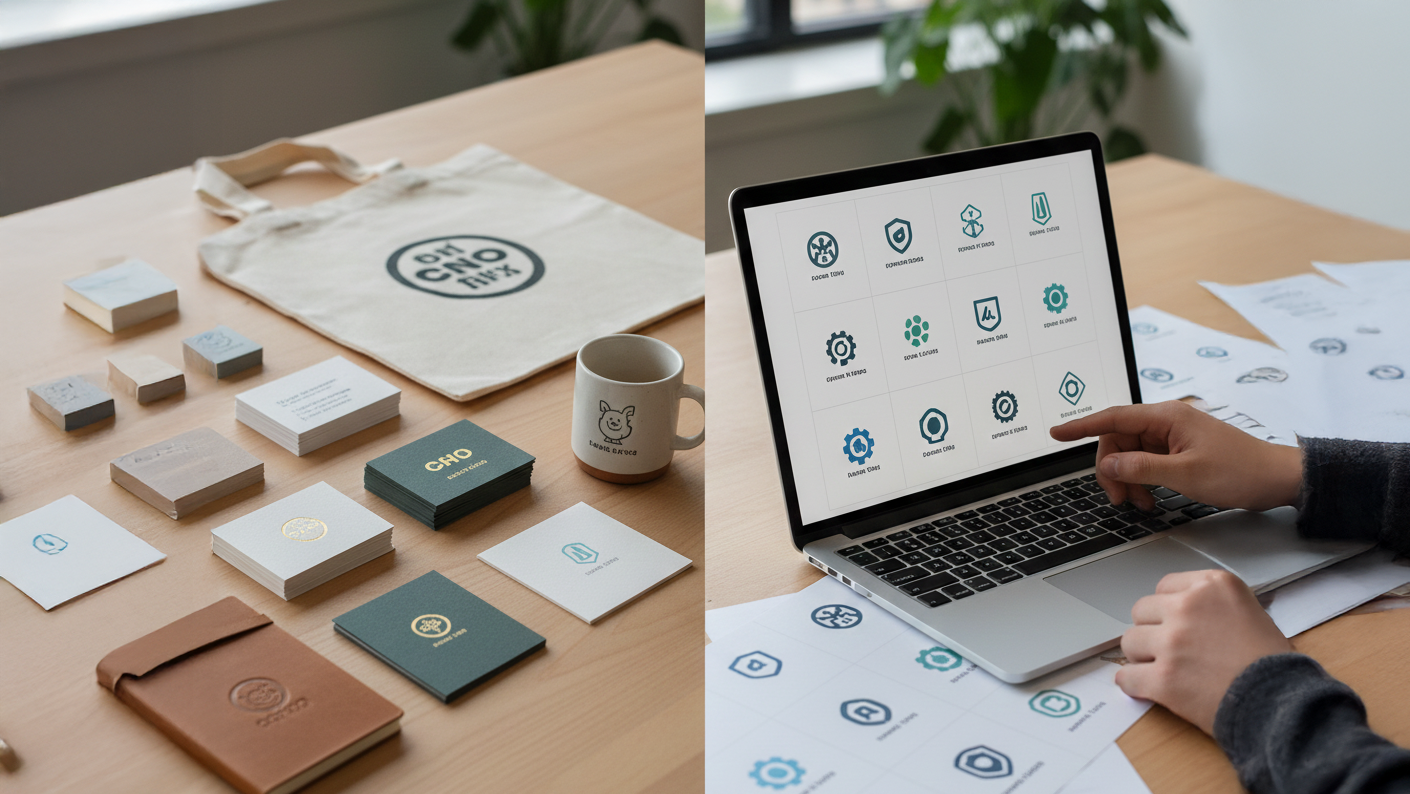
Every business can now generate a logo in 30 seconds. Most of them look professionally designed. And that’s precisely the problem.
When everyone has access to the same AI tools, trained on the same design patterns, optimised for the same statistical “success” metrics-differentiation becomes impossible through aesthetics alone.
The tools everyone uses become the tools nobody remembers.
This isn’t an anti-AI rant. It’s a reality check about what actually creates lasting brand value in an era where anyone can generate professional-looking design in seconds.
The Authenticity Crisis in Modern Branding
Here’s what’s happening across thousands of businesses right now:
Someone asks an AI to “design a modern, professional logo for a [industry] company.” The AI generates something clean, geometric, minimal. Probably sans-serif. Likely in a trendy colour palette. Almost certainly following current design trends.
It looks… fine. Professional, even. Exactly like what a design AI in 2026 would create after analysing millions of “successful” logos.
The business owner is thrilled. They’ve saved thousands on design costs. They have a logo that looks as polished as their competitors’.
Six months later, they can’t figure out why their brand isn’t memorable. Why customers confuse them with competitors. Why their visual identity generates zero emotional response.
The answer is simple: their brand identity is statistical average. It’s optimised for “not bad” rather than “distinctive.”
And in 2026, “not bad” is the same as invisible.
What AI Actually Does (vs What People Think It Does)
Let’s be precise about what’s happening when you use AI for brand design.
AI isn’t creating. It’s recombining.
It looks at thousands of examples of logos, colour schemes, typography, layouts. It learns patterns: what colours financial companies use, what shapes tech startups prefer, what fonts convey “professionalism” versus “creativity.”
Then it generates combinations that match those learned patterns. It’s remarkably good at this. The outputs are technically competent, aesthetically pleasing, and strategically… average.
The Pattern Recognition Problem
Because AI optimises for what has worked before, not what could work differently.
Your brand identity becomes a collage of existing successful patterns. Which means it looks like everyone else who’s also using those patterns. Which means it’s not actually a brand identity-it’s a brand template.
Why Authenticity Is Your Only Competitive Advantage
Here’s the uncomfortable truth: in 2026, being “professional” isn’t enough. Looking “modern” isn’t enough. Having a “clean aesthetic” isn’t enough.
Everyone has that now. The bar has risen. AI has commoditised competent design.
What can’t be commoditised? Authenticity.
Real brand identity doesn’t come from design patterns-it comes from genuine business differentiation. It’s the visual expression of what actually makes you different, not what makes you similar to successful companies in your industry.
What Authentic Brand Identity Requires
This requires:
Deep understanding of your business – Not surface-level “we value quality and customer service” nonsense that every company claims. What do you actually stand for? What trade-offs have you made? What do you refuse to compromise on?
Honest assessment of positioning – Where do you actually sit in your market? What do customers genuinely choose you for? What would they lose if you disappeared? (And if the answer is “nothing,” you have bigger problems than your logo.)
Strategic visual thinking – How does your visual identity communicate your actual positioning? What needs to be distinctive versus what should follow convention? What cultural or industry codes do you need to respect or deliberately break?
Consistency across touchpoints – How does your identity work across website, social, print, packaging, signage, motion? This isn’t about templates-it’s about systematic thinking that scales.
AI can’t do any of this. Because doing it requires understanding your specific business reality, not generating averages from statistical patterns.
The Tools Everyone Uses (And Nobody Remembers)
Let me tell you what I’m seeing across client pitches and competitor websites:
- The same colour palettes (2026 trending: muted earth tones or bold saturated primaries)
- The same typography (geometric sans-serifs, usually variable fonts for that tech-forward feel)
- The same layout principles (asymmetric grids, lots of white space, generous padding)
- The same animation patterns (subtle parallax, smooth transitions, micro-interactions)
- The same stock photography style (diverse teams in modern offices, or minimalist abstract shapes)
Everyone’s using AI to generate “modern professional design.” So everyone looks modern and professional and identical.
Who Actually Stands Out
The businesses standing out? They’re not following the pattern. They’re deliberately breaking it in ways that reflect their actual differentiation.
A law firm that positions on aggressive advocacy uses bold, confrontational design. An eco-friendly brand uses materials and aesthetics that physically demonstrate their values. A luxury service uses restraint and space to signal exclusivity.
These aren’t AI-generated patterns. They’re strategic choices based on genuine positioning.
Strategic Thinking vs Pattern Recognition
Here’s the fundamental difference:
Pattern Recognition (What AI Does):
- Analyse successful examples
- Identify common elements
- Generate variations that match patterns
- Optimise for statistical likelihood of success
Strategic Thinking (What Humans Do):
- Understand specific business context
- Identify genuine differentiation
- Make deliberate design choices that express positioning
- Accept that being distinctive sometimes means looking “wrong” to conventions
AI generates brand identities that look right. Humans create brand identities that mean something.
Where AI Genuinely Helps in Brand Development
So should you avoid AI entirely in brand development? No. But understand where it adds value versus where it adds genericness.
AI is excellent for:
Exploration and Iteration
“Show me 20 variations of this concept.” “Generate alternatives using this colour palette.” Rapid visualisation of possibilities.
Technical Execution
Generating design system components. Creating responsive layouts. Building consistent assets at scale.
Inspiration and Research
Gathering references. Analysing design trends. Understanding what’s being done in different industries.
Production Efficiency
Once you have a defined system, AI can help you execute it faster. Templates, variants, adaptations.
But strategy? Positioning? Differentiation? That’s still human work.
The Real Future of Branding
Brand identity in 2026 and beyond isn’t about having a nice logo and a trendy colour palette. It’s about:
- Clarity of positioning – Knowing exactly what you stand for and expressing it consistently
- Visual distinctiveness – Looking deliberately different in ways that reinforce your positioning
- Systematic thinking – Having a coherent visual system that works across every touchpoint
- Strategic evolution – Maintaining identity while adapting to market changes and business growth
- Authentic expression – Visual identity that genuinely reflects your business reality, not aspirational template design
None of this comes from AI generation. It comes from strategic thinking, creative expertise, and deep understanding of your business.
The Uncomfortable Questions About Your Brand
Here’s what you need to ask yourself:
If AI can generate your brand identity based on industry patterns and design trends, what does that say about your actual differentiation?
If your visual identity is just “professional” and “modern” like everyone else’s, what are you actually communicating about why someone should choose you?
If your logo could work equally well for any of your competitors, is it really expressing your brand-or just your industry?
These are hard questions. They reveal uncomfortable truths about positioning and differentiation that go far beyond design.
But they’re the right questions. Because in 2026, having a nice logo isn’t a competitive advantage. Everyone has a nice logo now. AI made sure of that.
The advantage comes from having a brand identity that authentically expresses genuine differentiation. And that still requires humans who can think strategically about business, not just generate aesthetically pleasing patterns.
What This Means Practically for Your Business
If you’re building or refreshing your brand identity in 2026:
Start with Strategy, Not Aesthetics
Before you touch any design tools (AI or otherwise), get clarity on positioning. What makes you genuinely different? What do you stand for? What customer need do you uniquely serve?
Use AI as a Tool, Not a Solution
AI can help you explore, iterate, and execute. But it can’t replace strategic thinking about how your visual identity should express your positioning.
Embrace Distinctive Over Safe
The entire point of brand identity is differentiation. If you’re optimising for “looks professional” you’re optimising for average. Sometimes the right choice looks wrong initially because it breaks conventions.
Think in Systems, Not Assets
You don’t need a logo, you need a coherent visual system that works across every touchpoint. This requires systematic thinking, not asset generation.
Value Expertise Over Tools
The competitive advantage isn’t which AI you use-it’s whether you have expertise to direct it strategically. Everyone has access to the same tools. Not everyone has strategic design thinking.
The Real Divide in 2026 Branding
2026 is revealing a stark divide in brand identity:
On one side: businesses with professionally generated, aesthetically pleasing, strategically meaningless design. Nice logos. Trendy colours. Complete lack of differentiation. Built in minutes by AI.
On the other side: businesses with brand identities that actually mean something. Distinctive. Strategic. Rooted in genuine positioning. Built by experts who understand both design and business strategy-using AI to work efficiently, but not to replace thinking.
The gap will widen. The commoditised will become more commoditised. The strategic will become more valuable.
Which side are you on?
If you’re ready to build a brand identity that actually means something-one that expresses genuine differentiation rather than industry averages – we should talk. We use AI to work efficiently, but we use human expertise to think strategically about what makes your business genuinely different.