Fintech branding and website design
Build a brand that scales past the founder narrative and clears procurement at the regulated buyers you sell into.

Freshly Brewed Marketing builds brands and websites for B2B fintech companies, in London and internationally. Most of our fintech clients are Series A and beyond, selling into financial institutions, accountants, lenders, or regulated infrastructure. The work usually follows a funding round, a product expansion, or a pivot from founder-led messaging to something the sales team can carry into a meeting.
Brand Strategy for Fintech Companies
Most fintech rebrands fail because they go straight to visuals before settling whether the company is selling a product, a platform, or a piece of infrastructure. We do that work first. Stakeholder workshops with founders, product, and sales. Audience research where access permits. Competitive landscape mapping across the regulated buyer set.
-
Founder, product, and sales interviews
Time across the leadership team to surface the strategy, the buyer signal, and the operational reality together.
-
Competitive landscape mapping
A grounded review of how fintech peers position themselves into financial institutions, lenders, and the regulated infrastructure layer.
-
Positioning and messaging architecture
A documented spine: positioning statement, value proposition, and audience-tuned variants for procurement, technical evaluators, and executive buyers.
-
Sales enablement language
Talk tracks, objection handling, and qualification language that map to the new positioning, distributed to the sales team during rollout.
Fintech Website Design
The website is doing too many jobs. Investor due diligence, customer evaluation, talent acquisition, partner conversations, regulator scrutiny, all coming through one site. Information architecture matters more than visual flair.
-
Information architecture for procurement
A site map structured around how regulated buyers actually evaluate vendors, not the org chart.
-
Trust and security signals
Security pages, integration documentation, certifications, and compliance posture surfaced where buyers look for them.
-
WordPress, HubSpot, or Webflow
Platform choice falls out of the brief, with WordPress for content-rich SEO sites, HubSpot when the marketing stack is already there, Webflow for design-led marketing sites.
-
Performance and Core Web Vitals
Lighthouse-grade performance, accessibility, and SEO baselines built into the templates.
Brand Systems for Scale
Tech companies grow fast. The brand needs to work across product launches, investor decks, conference stands, partner portals, and recruitment campaigns, without someone redesigning everything from scratch. Modular systems with the flexibility to scale.
-
Modular identity system
Logo, colour, typography, and imagery rules designed to flex across product lines, geographies, and acquisitions without breaking.
-
Component and template library
Slide masters, social templates, web component library, and email templates so internal teams produce consistent output without a designer in every loop.
-
Brand guidelines documentation
A working brand guidelines document, hosted or PDF, with sufficient detail for an external designer to land on-brand work first time.
-
Investor and fundraise materials
Updated decks, data rooms, and supporting collateral built within the brand system before each round.
Ongoing Support as You Grow
Many fintech clients started with a single project and moved to a retainer. The brand evolves as the product does, new features, new markets, new positioning. We keep pace.
-
Monthly retainer
A flexible day-rate allocation used across design, dev, and strategic input as the roadmap evolves.
-
Campaign and launch support
Product launch landing pages, supporting collateral, and content built within the brand system as launches surface.
-
Web maintenance and dev
Plugin updates, security, hosting, and small builds rolled into the retainer.
-
Brand stewardship
Editorial oversight on internal marketing output and a single accountability point for brand consistency.
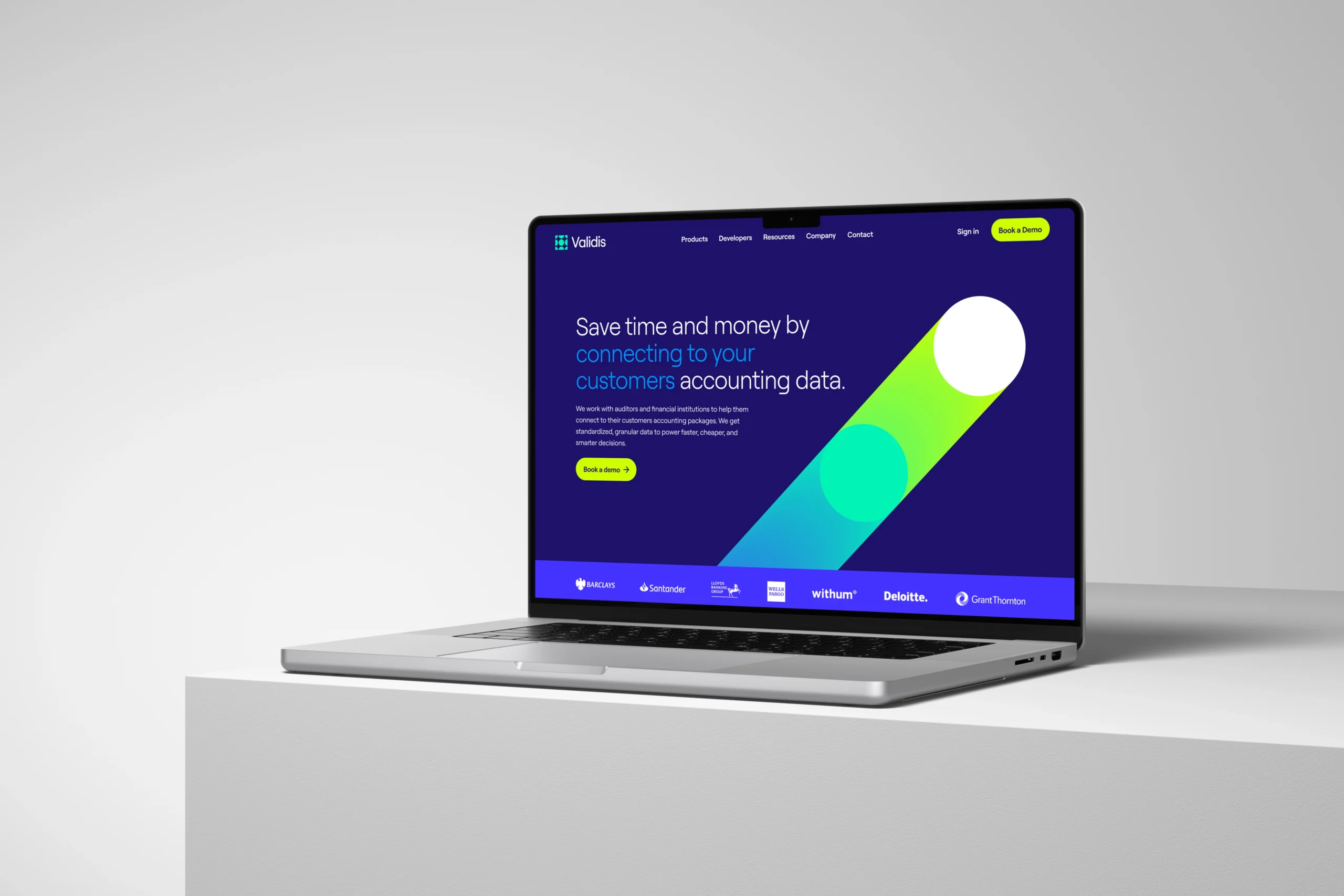
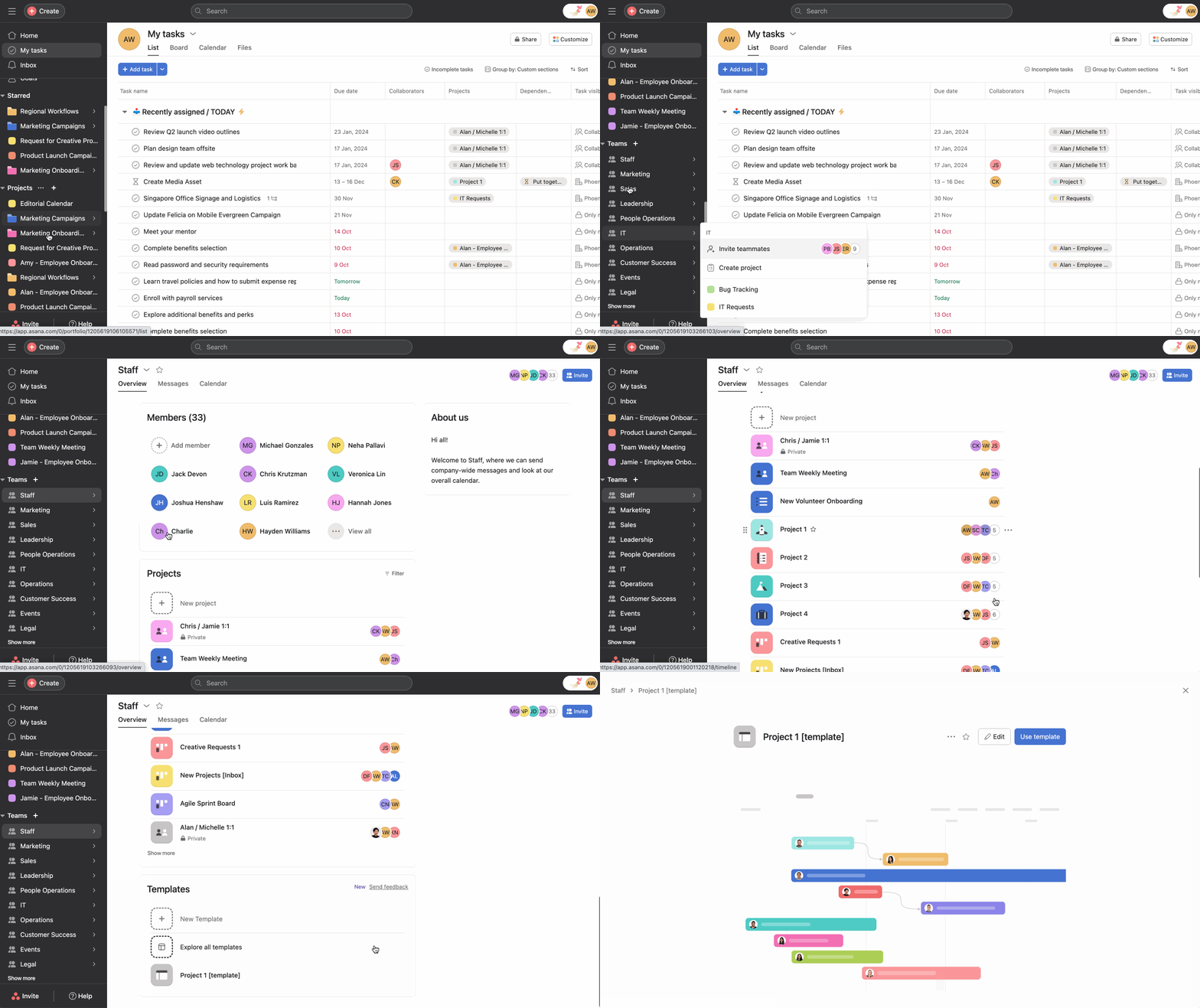
Multi-product fintech rebrand with portal or app integration

Common Questions
-
What types of fintech does Freshly Brewed work with?
Mostly B2B. Infrastructure, regtech, data platforms, payments infrastructure, fraud and risk, investment platforms, AI-driven fintech tooling.
-
How much does a fintech rebrand cost?
Series A fintech brand and website work typically runs £17,000 to £42,000. Series B+ projects run £42,000 to £68,000. Multi-product fintech transformations exceed £68,000.
-
How long does a fintech rebrand take?
A focused Series-A rebrand runs 12 to 16 weeks. Larger Series-B+ rebrands run 4 to 6 months. Multi-product platforms or international rollouts take longer.
-
Are you a fintech-only specialist?
No. Fintech is one of our strongest sectors but we also work with asset managers, insurers, industrial manufacturers, and defence-sector firms. The cross-sector experience is useful, many fintechs are selling into financial services and the brand has to land in their buyer’s world, not just their own.
-
Do you handle the technical performance side of a fintech website?
Yes. WordPress builds to Core Web Vitals targets, Cloudflare in front, image optimisation, schema markup, integration with HubSpot or Salesforce. Performance is part of the brief, not an afterthought.
-
How does Freshly Brewed compare to Fabrik Brands or Tenet for fintech?
Fabrik and Tenet are larger, more brand-strategy heavy, and operate at scale. Freshly Brewed is smaller, more hands-on, and bundles brand and website in a single engagement with a single team. Our comparison page covers the trade-offs.